
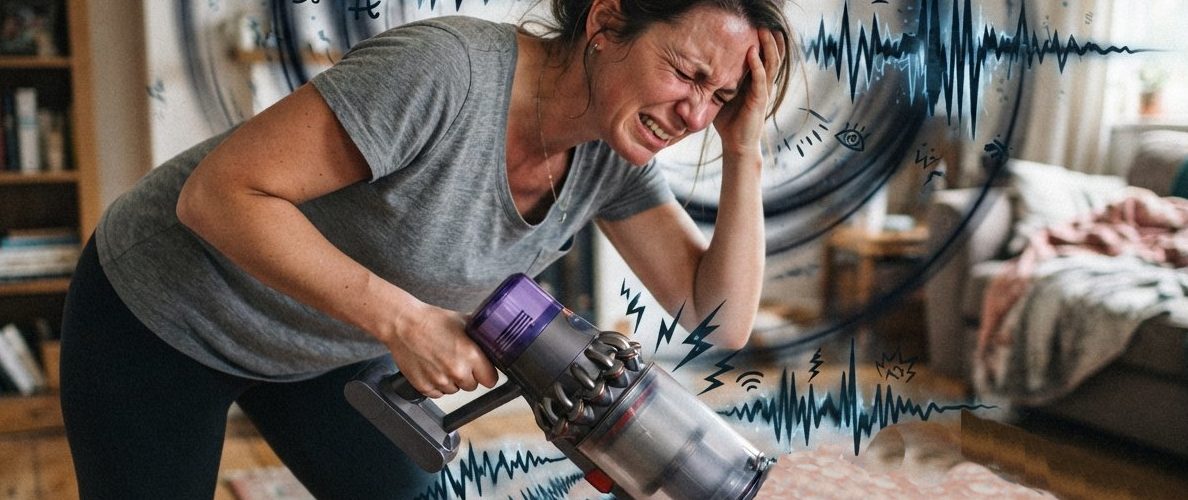
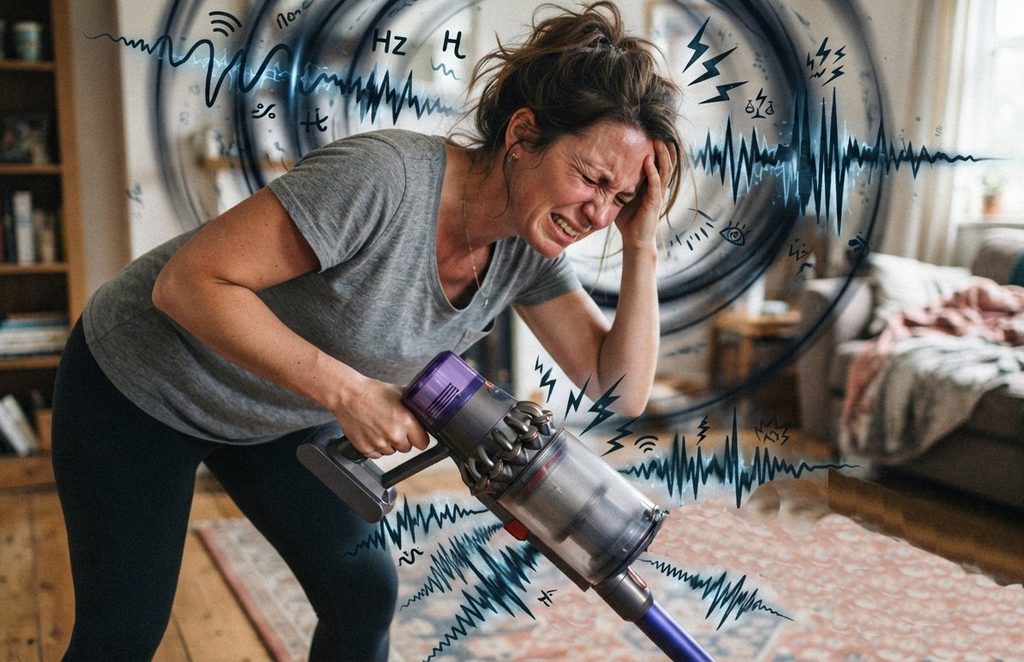
Household appliances generate invisible acoustic and electromagnetic frequencies that can trigger a persistent physiological stress response, causing fatigue, anxiety, and sensory overload in sensitive individuals. Modern homes are filled with an ambient backdrop of energy emitted by refrigerators, Wi-Fi routers, smart meters, and induction stoves. While these devices generally operate well within official public safety guidelines, the cumulative effect of extremely low-frequency (ELF) fields and constant low-level acoustic hums can keep the human nervous system in a subtle, continuous state of high alert. This constant environmental stimulation disrupts cellular equilibrium, impedes deep sleep cycles, and causes chronic mental fatigue.
Acoustic Frequencies and Sensory Overload
Every appliance powered by alternating current (AC) creates a baseline mechanical vibration. In North America, electricity cycles at a frequency of 60 Hz, while in many other parts of the world, it runs at 50 Hz. This current forces internal components like transformers, magnetic coils, and motors to physically vibrate.
Humans possess an audible hearing range between 20 Hz and 20,000 Hz. The low-frequency hums generated by refrigerator compressors, HVAC systems, and fans sit right at the bottom edge of this spectrum. Even if you do not consciously register these sounds, your ears never truly turn off. Your brain continuously processes ambient audio to evaluate the environment for potential threats.
For individuals with heightened sensory processing sensitivities, such as those with attention-deficit/hyperactivity disorder (ADHD) or misophonia, these minor acoustic frequencies can become agonizing. The nervous system fails to habituate to the sound. Instead of filtering the hum out as background noise, the brain fixates on it. This inability to block out the noise leads to immediate cognitive depletion, irritation, and an elevated heart rate.
Electromagnetic Fields and the Biological Stress Response
Beyond audible sound, household appliances emit non-ionizing electromagnetic fields (EMFs). These emissions are split into two primary categories: extremely low frequencies (ELF) and radiofrequencies (RF).
Extremely Low Frequencies (ELF): Devices with high electrical consumption or internal motors produce localized ELF fields. This includes washing machines, electric stoves, hair dryers, and vacuum cleaners. The magnetic field strength drops sharply with distance, but sitting or sleeping right next to these active appliances exposes the body to measurable fields.
Radiofrequencies (RF): Wireless appliances like Wi-Fi routers, smart TVs, Bluetooth speakers, and smart utility meters broadcast continuous high-frequency signals to transmit data across the home.
While these low-level fields lack the energy to break chemical bonds or damage DNA directly, a growing body of research explores how chronic exposure interacts with cellular structures. A primary hypothesis centers on the activation of voltage-gated calcium channels (VGCCs) in cell membranes. When exposed to external electromagnetic fields, these channels can allow an influx of calcium ions into the cell. This influx triggers a biochemical cascade, producing elevated levels of oxidative stress and free radicals.
On a systemic level, this cellular stress translates into a classic physiological fight-or-flight response. The body releases higher concentrations of stress hormones like cortisol and noradrenaline into the bloodstream. Over time, elevated cortisol levels cause systemic inflammation, muscle tension, and a general feeling of unexplained anxiety.
Disruption of Sleep Architecture and Melatonin
The impact of household frequencies becomes particularly pronounced during the night. The pineal gland produces melatonin, the hormone responsible for regulating circadian rhythms and ensuring deep, restorative sleep. Melatonin production is highly sensitive to environmental cues. Just as artificial light suppresses melatonin, evidence suggests that continuous exposure to high-frequency RF signals from routers and smart devices can trick the brain into reducing melatonin synthesis.
Furthermore, ambient low-frequency noises alter sleep architecture. Even if a humming appliance does not fully awaken you, it can pull you out of deep, slow-wave sleep and into lighter stages of sleep. Deep sleep is critical for physical recovery, cellular repair, and metabolic regulation. When appliance frequencies disrupt these deeper cycles, you wake up feeling unrefreshed. Chronic sleep deprivation diminishes your psychological resilience, making you far more vulnerable to daily stressors and mood disturbances.
Psychological Impacts and Habituation Fatigue
Living in a home filled with competing electronic frequencies causes a phenomenon known as habituation fatigue. In a natural environment, sounds and energies fluctuate. In a modern smart home, the energetic output is flat, persistent, and unnatural.
The human brain expends a significant amount of energy trying to suppress predictable, continuous background data. When your brain is constantly working to ignore the refrigerator buzz, the router signal, and the laptop fan, its overall processing capacity decreases. This manifests behaviorally as brain fog, a shortened attention span, and decreased patience. You may find yourself snapping at family members or feeling overwhelmed by minor tasks simply because your brain is exhausted from managing the invisible sensory environment.
Additionally, a lack of validation compounds this psychological stress. Because many of these frequencies are at the threshold of human perception, one person in a household might suffer intensely while another notices nothing at all. This discrepancy can cause the sensitive individual to feel isolated or misunderstood, adding emotional tension to an already strained nervous system.
Vaccum Cleaner can be the worst!
Vacuum cleaners are inherently chaotic machines that combine high-speed electric motors with high-velocity airflow. However, different manufacturers approach the engineering of these systems with vastly different priorities, budgets, and technologies, so not all vacuum cleaners have the same effect.
Here is a breakdown of why specific vacuum designs and manufacturing choices can trigger significantly higher stress and negative physiological reactions.
Motor Type and Operating Speed
The heart of any vacuum cleaner is its electric motor, and the specific technology used dictates the primary frequency it emits:
- Traditional Brushed Motors: Found in many budget-friendly or older vacuum models, these motors rely on carbon brushes that physically rub against a spinning commutator. This mechanical friction creates a harsh, grinding acoustic profile and generates a significant amount of high-frequency electromagnetic interference (EMI) due to micro-sparking inside the motor housing.
- Modern Brushless (Digital) Motors: Higher-end makes often utilize digital, brushless motors. Because they eliminate physical contact brushes, they run much smoother and quieter. However, they spin at incredibly high speeds (often over 100,000 RPM). This shifts the acoustic frequency from a low, gravelly roar to a high-pitched, piercing whine. For individuals sensitive to high-frequency sounds, this piercing pitch can cause immediate ear discomfort and spike anxiety much faster than a lower-pitched machine.
Acoustic Tuning and Sound Quality (Psychoacoustics)
Two vacuums can produce the exact same decibel level (loudness) but feel completely different to the human ear because of psychoacoustics—how the human brain perceives sound quality.
- Unrefined Designs: Cheaply made vacuums often suffer from a lack of internal acoustic engineering. The sound frequencies they emit are erratic and scattered, creating “white noise” with harsh, sharp spikes at unpredictable frequencies. The human brain perceives this chaotic sound as an immediate threat, triggering a sudden release of cortisol.
- Acoustically Tuned Designs: Premium brands actively invest in sound engineering. They design internal air pathways and motor housings to smooth out the sound waves. They tune the machine so that the frequencies emitted are harmonious, deeper, or more consistent. A predictable, smooth hum is much easier for the nervous system to tolerate than a harsh, erratic shriek.
Housing Materials and Vibration Isolation
When a motor spins at high speeds, it transfers mechanical energy into the vacuum’s body. How that body is built dictates how much it vibrates:
- Thin, Hard Plastics: Budget makes often use thin, rigid plastic casings. These plastics act like a speaker cone, amplifying internal motor vibrations and rattling the loose joints of the vacuum components. This creates a secondary, low-frequency structural vibration that resonates through your hands, arms, and the floors of your home, exacerbating sensory overload.
- Damped Materials and Rubber Mountings: High-quality designs isolate the motor from the outer shell using rubber shock absorbers, silicone seals, and double-walled insulated casings. This traps both the acoustic noise and the physical vibrations inside the machine, preventing the user from absorbing that physical stress through their hands.
Airflow Aerodynamics and Exhaust Path
A major portion of a vacuum’s noise doesn’t come from the motor, but from the air tearing through the machine.
- Turbulent Air Pathways: Sharp bends, rough internal plastic edges, and restrictive filters cause the air to tumble violently. This turbulence creates a chaotic, rushing roar that sounds incredibly intense and aggressive.
- Laminar Airflow Designs: Advanced makes utilize aerodynamic modeling to ensure air flows in straight, smooth lines (laminar flow) with minimal restriction. This changes the sound of the moving air from an aggressive, turbulent roar to a softer, more tolerable rushing wind sound.
Electromagnetic Field (EMF) Shielding
Because you hold a vacuum cleaner close to your body and stand near its main housing, your proximity to its electromagnetic field is very high while cleaning.
- Poorly Shielded Models: Cheap or lightweight vacuums often omit heavy metal shielding around the motor to save on production costs and weight. This allows the localized extremely low frequency (ELF) magnetic field to expand several feet outward, enveloping your lower body or torso while in use.
- Shielded Models: Responsibly engineered makes enclose the motor assembly in robust metallic housings or use specific internal wiring layouts that naturally cancel out or contain the strongest electromagnetic emissions, keeping your direct exposure to a minimum.
Practical Mitigation Strategies
You do not need to abandon modern technology to find relief from household frequencies. Implementing targeted changes to your living environment can substantially reduce your exposure and allow your nervous system to reset.
- Establish a Sleep Sanctuary: Keep all major electrical devices at least three feet away from your bed. Avoid placing your bed against a wall that has a refrigerator, smart meter, or circuit breaker panel directly on the other side.
- Manage Wireless Signals: Use a simple mechanical timer to automatically turn off your Wi-Fi router every night during your sleeping hours. Whenever possible, transition stationary devices like computers and gaming consoles to wired Ethernet connections to minimize ambient RF radiation.
- Address Acoustic Vibrations: Place anti-vibration rubber mats under loud laundry machines, refrigerators, and portable air conditioners. These mats absorb mechanical energy before it travels through the floors and walls of your home.
- Incorporate Sound Masking: If you cannot eliminate a low-frequency hum, use a dedicated white or brown noise machine to mask the sound. Brown noise is particularly effective because it emphasizes lower acoustic frequencies, effectively blending the intrusive appliance noise into a soothing, natural waterfall effect.
- Use Noise Cancelling Headphones. Active noise-cancelling (ANC) headphones interact with household appliance frequencies through a process called destructive interference, using built-in microphones and processing chips to neutralize incoming soundwaves. However, because vacuum cleaners emit a complex mix of both very low and very high frequencies, ANC technology handles different parts of a vacuum’s acoustic profile with varying levels of success.